
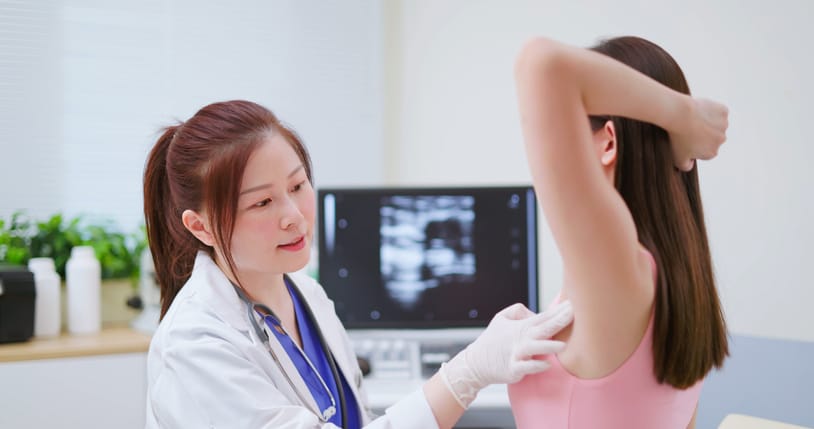

When I first heard that all the axillary lymph nodes in my right arm would be removed as part of my breast cancer treatment, I nodded, smiled and tried not to imagine the consequences. Later, as I navigated life post-surgery, reality hit me like a pan I couldn’t lift: this was no small change.
The heaviness came first. Not just physical, but a constant, subtle reminder that my right arm wasn’t quite mine anymore. Washing dishes takes longer—frequent pauses to rest, a shake, a sigh. Cooking a meal? Strategic planning is required: which pan I lift, when I stir, how high I reach. Even taking out the garbage isn’t something I can do alone. And yet, I push myself—I don’t want to be a burden, I don’t want anyone else to notice.
Then, there’s the worry: lymphoedema. It’s always there, like a tiny voice whispering, “Be careful. Move wisely.” The exercises, stretches and movements that once seemed optional are now essential. The last thing you want to do is move an arm that feels heavy, tender or stiff, but movement is prevention. Lift, extend, rotate, stretch—in tiny doses, with intention—because this arm still needs to flow.
Learn more about breast cancer treatment and care
The Lymphinator to the rescue
And so, I found a superhero persona I didn’t expect: The Lymphinator. My arm may be swollen, but it has a mission. It’s learning, stretching, lifting, pushing, adapting and guarding against the unknown. Every small task—washing dishes, carrying my granddaughter, lifting my dog—is a test of strategy, patience and endurance. Every stretch is training. Every careful movement is practice.
Cording (a symptom that causes tight, rope-like cords under the skin from the armpit down the arm) is the drama queen of post-surgery recovery—one moment I’m reaching for the cupboard, the next I’m performing an unplanned zig-zag dance move because my arm refuses to cooperate. Cue the dry brushing, lymphatic drainage, careful massage—my arm has become a high-maintenance but fascinating ecosystem. There’s ritual rhythm, and a lot of sighs involved.
And yet, amidst the heaviness, the pauses, the stretches and the “Why is this arm suddenly useless?” moments, there’s humour and resilience. Some days, my arm feels like mine. Other days, I feel like it’s testing me. But every day, it teaches me patience, awareness and pride in small victories: finishing a dish without grimacing, picking up my granddaughter without hesitation, even scratching an itch without overthinking.
If there’s a lesson in living with lymph node removal in my dominant arm, it’s this: our bodies adapt. We learn. We move. We find humor in the heaviness and strength in the limitations. Exercise, stretch, breath and keep everything flowing. And sometimes, we get to be superheroes—sassy, female, fierce and entirely in charge of our lymphatic destiny.
The Lymphinator may not wear a cape (though a stretchy sleeve counts), but she shows up, lifts, moves, laughs at her own zig-zags and keeps flowing through every day, every task, every small victory. My right arm learned a new way to move—and so did I.
My right arm carries less, but I carry on.
Sign up here to get the latest news, perspectives, and information about breast cancer sent directly to your inbox. Registration is free and only takes a minute.

