
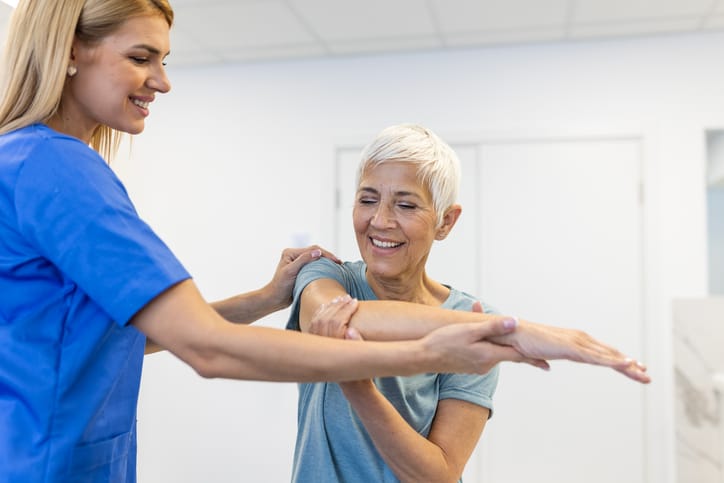
Surgery is often a major milestone in breast cancer treatment, but recovery doesn’t end when the operation is over. Physical therapy plays an important role in helping many people regain strength, restore mobility and return to daily activities with confidence.
Knowing what to expect can make the process feel less intimidating and more empowering.
The role of physical therapy
After breast cancer surgery—whether you had a lumpectomy, mastectomy, lymph node removal or reconstruction—the body needs time to heal. Pain, stiffness, swelling and reduced range of motion are common, particularly in the shoulder, chest and upper back.
Learn more about breast cancer treatment and care
Physical therapy focuses on restoring movement while reducing the risk of long-term complications such as frozen shoulder, scar tightness or lymphedema (swelling caused by lymph fluid build-up). Starting early with gentle movement under professional guidance can improve comfort and long-term function.
When physical therapy usually begins
The timeline varies depending on type of surgery and individual recovery. In many cases, gentle exercises begin within days or weeks after surgery. Early movements are usually simple and designed to prevent stiffness without stressing healing tissues.
Your oncology team will let you know when it’s safe to begin. A physical therapist trained in cancer rehabilitation will then tailor a program specifically to your needs.
What to expect at the first appointment
The first session typically involves an assessment. Your therapist may check your posture, shoulder movement, strength, scar healing and look for any swelling or discomfort. They’ll ask about your daily activities and personal goals, whether that’s returning to work, caring for family, exercising or simply moving without pain.
From there, they’ll create a gradual and personalized plan. You’ll likely receive exercises to practice at home, which are a key part of recovery.
Exercises included in physical therapy
Early exercises often focus on gentle range-of-motion movements. These might include:
- Shoulder rolls and arm lifts
- Wall-climbing exercises using your fingers
- Gentle stretches for the chest and upper back
As healing progresses, strengthening exercises are recommended to rebuild muscles affected by surgery and inactivity. You’ll likely start with small hand weights and progress slowly over time.
Managing scar tissue and preventing lymphedema
Physical therapists may use specialized techniques such as scar massages to improve flexibility and reduce tightness.
If lymph nodes were removed, they may also monitor for lymphedema and teach you strategies to reduce swelling, including manual lymphatic drainage, compression garments and targeted exercises.
How long physical therapy lasts
Some people attend only a few physical therapy sessions after breast cancer surgery, while others benefit from several months of guided rehabilitation.
Remember that recovery isn’t a race; it’s a gradual process that unfolds at its own pace.
Sign up here to get the latest news, perspectives, and information about breast cancer sent directly to your inbox. Registration is free and only takes a minute.

