
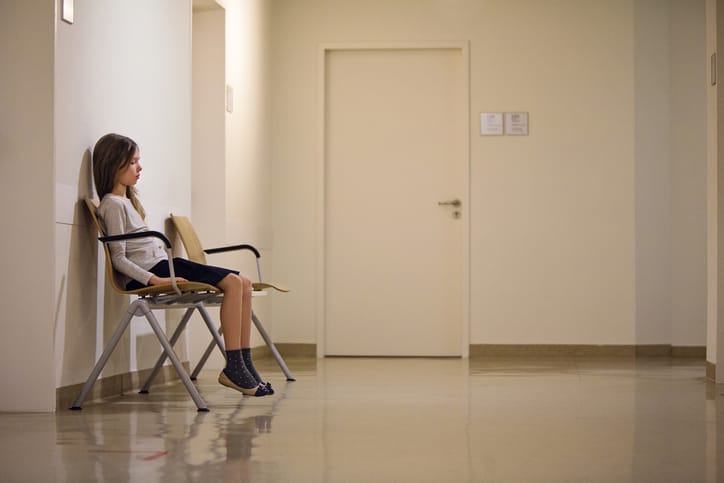

The first time I sat in an oncology waiting room, I wasn’t the one being called in by name.
I was the daughter—the one in the chair closest to the wall—holding my breath while my mother fought uterine cancer. I learned early how time stretches in those rooms. How hope and fear can sit side by side. How love sometimes sounds like silence.
Years later, when I found myself on the other side of that door—being called in as the patient—I realized cancer had returned to my life wearing a different name, but asking the same questions.
My name is Marie. In November 2022, at 44 years old, I was diagnosed with stage three lobular breast cancer.
Watching my mother’s journey with cancer
If you’re reading this on Breast Cancer Companion, there’s a good chance you already know what comes next: the appointments, the acronyms, the way your life suddenly becomes divided into before and after. My diagnosis didn’t arrive with drama or clarity. It came quietly—wrapped in medical language, long pauses, and the kind of silence that lands heavy.
But from the beginning, I made a decision: this would not be a story told only through loss. It would also be a story about choice, humour, and choosing myself—again and again.
Before I was ever the patient in the chair, I was the daughter in the waiting room.
Watching my mother navigate cancer shaped me in ways I didn’t fully understand at the time. Losing her reshaped me even more. Grief has a way of preparing you for things you never want to be prepared for. So when my own diagnosis came, I realized I wasn’t starting from zero—I was carrying her with me into every scan, every appointment, every decision.
I knew the fear. I knew the love. And I knew that none of this follows a straight line.
Becoming the patient
Being both the daughter and the patient has given me a layered understanding of this journey. I know what it feels like to sit beside someone you love, searching their face for reassurance. And I know what it feels like to be the one offering that reassurance—sometimes before you’ve fully found it for yourself.
One of the most personal decisions I made during treatment was choosing not to pursue breast reconstruction.
It wasn’t a choice made lightly. And it certainly wasn’t made to be brave, bold or contrary. It was simply the choice that felt right for me. In a world that often rushes women toward “fixing” their bodies, I chose acceptance over replacement. That decision eventually led me to become a Amoena Canada Custom Breast Form ambassador—an honour I hold with deep pride.
For me, opting out of reconstruction wasn’t about what I lost. It was about how I chose to move forward in my body as it is now: whole, strong and entirely mine.
If you’re reading this while navigating surgical decisions, body image questions or identity shifts, I want you to hear this clearly: there is no single right choice. Empowerment doesn’t have one shape. Sometimes, it looks like rebuilding. Sometimes, it looks like redefining. Sometimes, it looks like standing still and saying, this is enough.
Choosing joy
Cancer has a way of stripping life down to its essentials. It clarifies what matters, who matters and how deeply you are capable of showing up for yourself. Along the way, I’ve learned that positivity isn’t about pretending things are easy. It’s about allowing light to exist alongside the hard stuff.
Sometimes that light shows up as laughter—in chemo chairs, in awkward exam rooms, in moments where humour feels almost inappropriate.
Almost.
Laughter didn’t minimize my diagnosis. It helped me survive it.
To those newly diagnosed, in active treatment or living in the long and complicated after—I see you. You don’t have to be brave every day. You don’t have to find meaning right away. You don’t owe anyone inspiration.
What you owe yourself is honesty,ompassionnd permission to feel it all.
Cancer may be part of my story, but it is not the headline.
The headline is this: I am still here. I am still choosing joy. And I am still becoming.
And if my journey resonates with you, know this—you are not alone. Whether you’re the patient in the chair or the loved one in the waiting room, your experience matters. Your voice matters.
And your story—just like mine—is still unfolding.
I’m still here. I’m still choosing joy.