
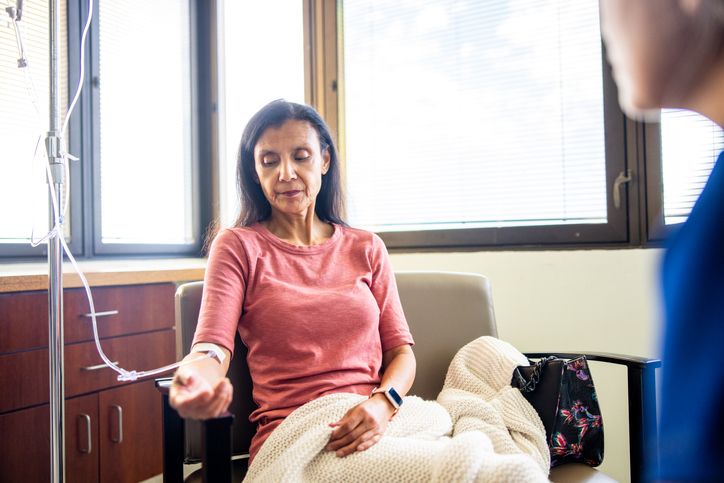
First-line treatment for breast cancer refers the initial treatment chosen by your doctor. This decision is based on criteria such as the type and stage of your breast cancer, as well as your age and overall health.
It is not uncommon for first-line breast cancer treatment to stop working after a period of time. This can be an upsetting experience and can cause feelings of disappointment, anxiety and powerlessness. However, you mustn’t lose hope, as there are other options available. In fact, it’s common to undergo multiple lines or methods of treatment before treatment is over.
What does first-line breast cancer treatment include?
Your healthcare team will choose the best first-line treatment for your individual case, depending on the type and stage of your breast cancer.
Treatment options can include one or more of the following:
- Surgery
- Chemotherapy
- Immunotherapy
- Targeted therapies
- Radiation
- Hormone therapy
Later lines of breast cancer treatment may also include a combination of different versions of these treatments options.
Learn more about breast cancer therapies
How do I know my first-line breast cancer treatment has stopped working?
Even if you have a positive initial response to your first-line breast cancer treatment, it is possible for the treatment to stop working. During your cancer treatment, routine scans will monitor the size of your tumor to check if it is progressing, shrinking or staying the same. If it progresses or if new lesions are identified in other parts of the body, this indicates that the treatment is not effective.
Other signs that your treatment might not be working include a return of symptoms or the onset of new symptoms.
Self-reported symptoms are essential to understanding the body’s response to cancer treatment, so it is important to immediately share any concerns with your doctor, even if you don’t think they are related to the tumor or treatment.
Why can first-line breast cancer treatment stop working?
The two main reasons why first-line breast cancer treatment stops working include:
- The tumor is aggressive or becomes resistant to first-line chemotherapy, immunotherapy, targeted or hormone treatment.
- The tumor has evolved or changed over time and therefore requires a different approach to treatment.
In some cases, breast cancer treatment can be stopped if side effects become too severe.
A CT or PET scan will give clear imaging of your tumor, allowing your doctor to evaluate the effectiveness of treatment. A repeat scan or a biopsy is likely to be ordered to confirm their concerns.
What happens once my first-line breast cancer treatment stops working?
When it has been confirmed that your first-line treatment is no longer working, your healthcare team will assess other options. They will choose the best second-line treatment in the same way they chose your first-line treatment–by referring to guidelines and considering the cancer type, stage and progression, as well as your age, overall health and the potential side effects. They may also look at the possibility of you participating in a clinical trial.