
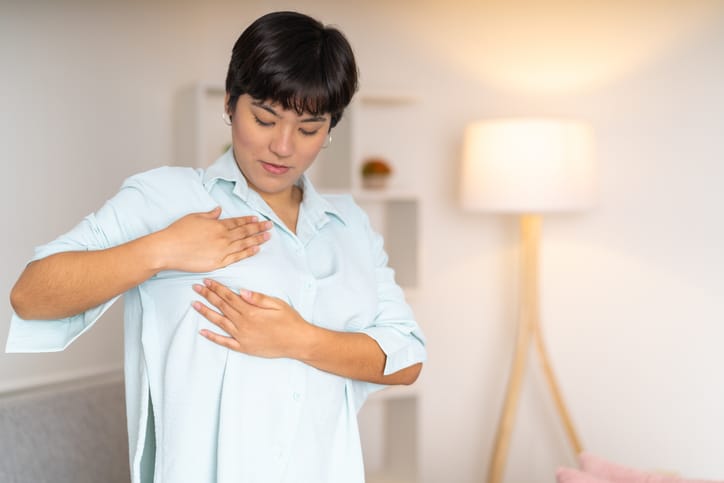
A physical breast exam includes a doctor thoroughly examining the breasts for any evidence that points to the possibility of breast cancer or other forms of breast disease, such as cysts and abscesses.
Alongside medical imaging and breast tissue biopsy analysis, a physical breast exam is an integral part of the clinical process to rule out breast cancer or to determine the extent to which it has spread.
The procedure in a nutshell
This procedure requires you to expose your breast and the surrounding tissue so that doctors can look for any possible abnormalities. Doctors are well-trained in performing systematic physical breast exams, ensuring that nothing is overlooked. If the doctor is male, a female chaperone may also be present.
First, your doctor will press on your breast and the surrounding tissue to make sure that there are no unusual lumps and bumps present. Your doctor will then systematically work around your breast tissue to ensure that every inch is checked. Your doctor will note if there are changes to your skin texture, including “orange peel” skin changes that may indicate an infection of the nipple.
The next step in your breast exam is to check whether lymph nodes are enlarged, which is often the case when the immune system works overtime due a detected threat. Your lymph nodes are located across your head and neck, as well as your armpits.
Your doctor will likely put some pressure on the area to make sure that no lymph nodes appear engorged, which could be a sign of relatively advanced disease.
Performing breast self-examinations
A physical breast exam may not be the most comfortable experience, as doctors need to examine the entire area to ensure that they do not miss any hidden lumps and bumps. The goal of a physical examination is to complement other areas of investigation to ensure that doctors have the best idea of what is going on in your breast tissue.
If you feel uncomfortable with a typical breast exam performed by a doctor, or if you just want to quell any health-related anxiety, you may want to perform a self-examination at home.
Breastcancer.org states there are five steps included in a breast self-exam, and while many experts now state that formal self-exams are no longer necessary, the medical community is in agreement that the most important thing is to become familiar with how your breasts normally look and feel so you can notice any changes.
Sign up here to get the latest news, perspectives, and information about breast cancer sent directly to your inbox. Registration is free and only takes a minute.