
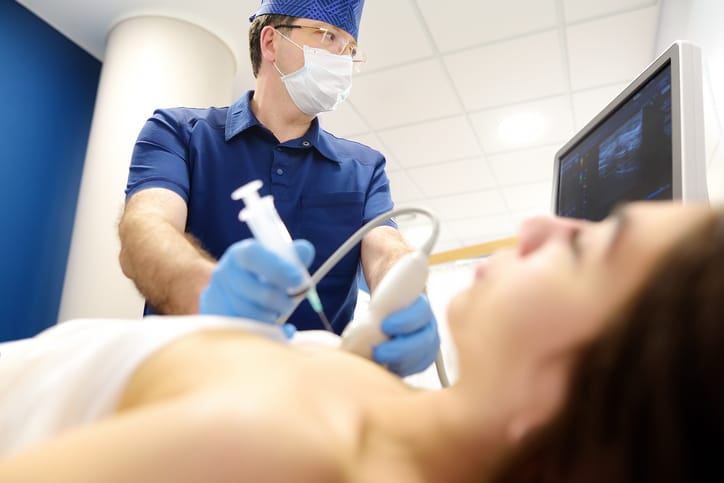
A biopsy of the breast is performed to diagnose breast cancer based on the findings of a physical exam or imaging. It is a minor surgical procedure that involves taking a sample of breast tissue for testing in a laboratory.
There are different types of breast biopsies available, and your doctor will decide which one is best suited to your situation.
When is a breast biopsy required?
The first step towards a breast cancer diagnosis is often identifying symptoms such as nipple discharge or changes to the skin or nipple. If this is followed by the detection of a lump or unexplained changes to the breast during a physical breast exam, further testing is required.
Learn more about breast cancer testing and diagnosis
A mammogram, breast ultrasound and/or MRI will confirm or dismiss suspicions of an abnormal area of breast tissue. If a tumor is identified, its shape, size and location will be mapped to prepare for the biopsy.
A breast biopsy may then be necessary to identify the reason for the lump or abnormal changes.
What are the types of breast biopsies?
Needle or core needle biopsy: This is the most common method in which doctors use a hollow needle with a cutting tool to remove fluid and breast tissue.
Fine needle aspiration: A fine needle is inserted into the breast to extract fluid and cells.
Vacuum-assisted biopsy: The doctor uses a hollow needle attached to a vacuum device guided by imaging such as a mammogram or an ultrasound. Slightly more invasive than a needle biopsy.
Punch biopsy: A small device cuts through breast tissue and removes a sample.
Wire-guided biopsy: A surgical biopsy that requires a general anesthetic. It’s used when the abnormal area of breast tissue is difficult to access.
All the above techniques use local anesthetic, except wire-guided biopsies, which are more invasive and require a general anesthetic.
What to expect during a breast cancer biopsy
A biopsy is a simple outpatient surgical procedure that should take no longer than an hour, unless you require a wire-guided biopsy.
Here is what you can expect during the procedure:
- The doctor will first take a mammogram or ultrasound of the breast before administering a local anesthetic to numb the breast area.
- A small incision in the skin will allow the needle to access the breast and remove a small sample of tissue.
- You can expect a feeling of pressure from the insertion of the needle or cutting tool, but it shouldn’t be painful.
- When sufficient tissue samples have been removed, pressure will be applied to the incision site to prevent bleeding or bruising.
- A dressing will be applied to keep the site clean and dry.
Following the procedure, you may have some residual discomfort and swelling for the next couple of days. Report any continuing or worsening pain or swelling to your doctor.
Sign up here to get the latest news, perspectives, and information about breast cancer sent directly to your inbox. Registration is free and only takes a minute.