
If your doctor told you your mammogram was abnormal, you may be wondering what this means in terms of next steps. But an abnormal result doesn’t automatically mean you have cancer. In fact, most abnormal mammograms are caused by benign conditions such as cysts, dense breast tissue or harmless calcifications.
Understanding what typically happens next after abnormal results can help ease anxiety and make the process feel more manageable.
Why mammograms can come back abnormal
A mammogram refers to an X-ray image of the breast used to screen for signs of breast cancer. Radiologists look for changes such as lumps, unusual tissue patterns or small calcium deposits.
An abnormal result simply means the radiologist saw something that needs a closer look. Common reasons for an abnormal mammogram include:
- A suspicious lump or mass
- Areas of dense breast tissue that are difficult to interpret
- Clusters of calcium deposits (calcifications)
- Tissue patterns that are distorted or irregular
- Asymmetry between the breasts
- Blurry or incomplete images that need to be repeated
Because mammograms are designed to catch even subtle changes, they sometimes flag findings that later turn out to be harmless.
Next steps after an abnormal mammogram
The most common next step after an abnormal screening mammogram is additional imaging. This helps doctors get a clearer picture of the area that raised concern.
Tests may include:
- Diagnostic mammogram: A more detailed mammogram that focuses on a specific area of the breast.
- Breast ultrasound: Uses sound waves to determine whether a lump is solid or fluid-filled (such as a cyst).
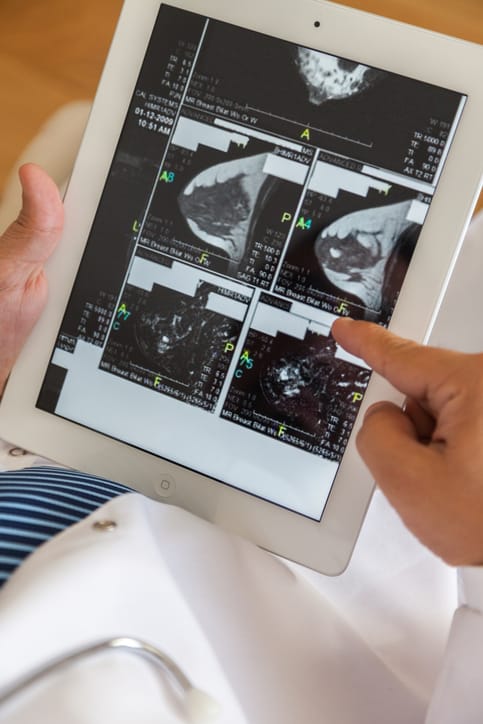
- Breast MRI: Sometimes recommended for people at high risk of breast cancer or when other imaging results are unclear.
Learn more about breast cancer testing and diagnosis
Your doctor will likely discuss the results with you during your visit, which may indicate the following:
- Whatever initially looked suspicious is completely benign and you can return to your regular mammogram schedule.
- The finding is probably benign but still worth monitoring. Your doctor may recommend follow-up imaging in about six months.
- The imaging remains suspicious and your doctor might recommend a biopsy.
What happens if I need a biopsy?
If a doctor suspects an abnormal mammogram might be cancer, the next step is likely a biopsy. This procedure removes a small sample of breast tissue so it can be examined under a microscope.
Common biopsy types include:
- Core needle biopsy: A needle removes small tissue samples from the breast.
- Fine needle aspiration: A thinner needle withdraws cells or fluid.
- Surgical biopsy: A small procedure that removes part or all of the abnormal area.
Most biopsies are done using local anesthesia and imaging guidance, such as ultrasound or mammography.
What to keep in mind
While an abnormal mammogram can feel alarming, it is a fairly common result. Many people are called back for additional testing, and most ultimately learn that the finding is not cancer.
If you’re called back after an abnormal result, try not to panic. Schedule your follow up as soon as possible and ask your healthcare provider to explain your results and next steps.
Remember that mammograms are designed to detect breast cancer as early as possible, when treatment is most effective. Being called back for more testing is part of that careful process to ensure nothing important is missed.
Sign up here to get the latest news, perspectives, and information about breast cancer sent directly to your inbox. Registration is free and only takes a minute.