
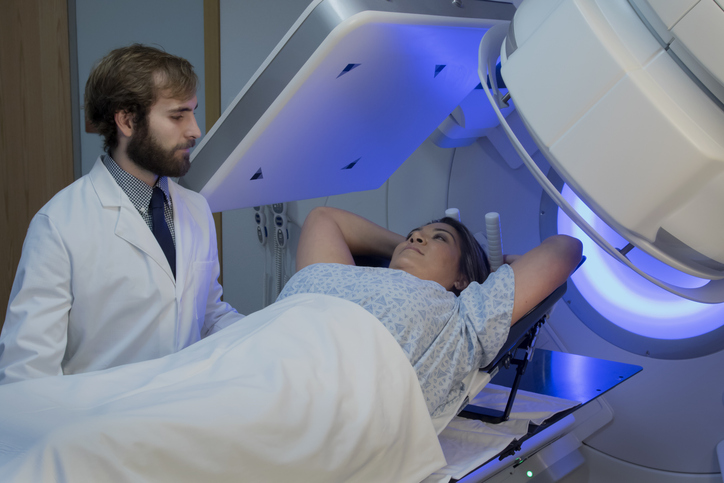
Radiation therapy is often utilized following breast cancer surgery to kill any remaining cancer cells and reduce the risk of recurrence. It may also be used before surgery to shrink the tumor.
Radiation dose and schedule varies and will be decided by your doctor to ensure an effective response while limiting the risk of exposing healthy tissue and organs to radiation. The decision on when and how much radiation should be given is based on a number of factors such as cancer type, stage and size.
What is radiation therapy in breast cancer treatment?
Radiation therapy is used in treating breast cancer following surgery or a combination of surgery and chemotherapy. It uses high-energy x-ray beams to kill cancer cells that may be invisible or hidden following surgery or chemotherapy. The dose and schedule need to be carefully planned to avoid exposing the heart, lungs and other healthy tissue to radiation.
Learn more about breast cancer therapies
External beam radiation therapy is most often used in breast cancer treatment. While radiation therapy is adapted to each individual case, often it involves daily treatments of 30 to 60 minutes, over a period of three to six weeks.
A Gray is the unit that radiation oncologists use to measure a dose of radiation therapy. For an example of dose, in the case of a standard five week schedule, the dose would be 45-50 Gray over five weeks, or 1.8 to 2 Gray for 25 treatments.
There is also an accelerated or hypofractionated schedule of radiation therapy that increases the dose of radiation to 40 Gray in 15 doses or 42.5 Gray in 16 doses with the addition of a boost dose. This reduces the schedule to one to three weeks. This is more common in cases of early-stage breast cancer.
In both cases, daily or weekly scans can help monitor your response to the treatment.
Treatment will likely start when your surgical wounds have completely healed, or two to three weeks after your last round of chemotherapy.
How will my doctor decide the radiation dose and schedule?
Following surgery, you will likely undergo a CT scan, and a radiation oncologist will map the areas requiring radiation. The type of radiation, the dose and the schedule will be tailored to your individual situation and take into consideration:
- Type, stage, size of tumor
- Lymph node involvement
- Hormone receptor and HER2 status
- Type of surgery (lumpectomy or mastectomy)
- Radiation therapy needs (whole or partial breast radiation)
- Your age, health, breast size and shape
- Your healing and recovery post-surgery
What are possible side effects of radiation therapy?
During radiation therapy appointments, you won’t feel any discomfort, but there are some potential side effects that may occur post-treatment.
Short-term side effects may include:
- Breast pain
- Fatigue
- Skin irritation
- Skin discoloration
Longer term side effects may include:
- Changes to the shape of the breast
- Difficulty or inability to breastfeed
- Nerve damage to the arm
- Spider veins
- Swelling of the underarm lymph nodes