
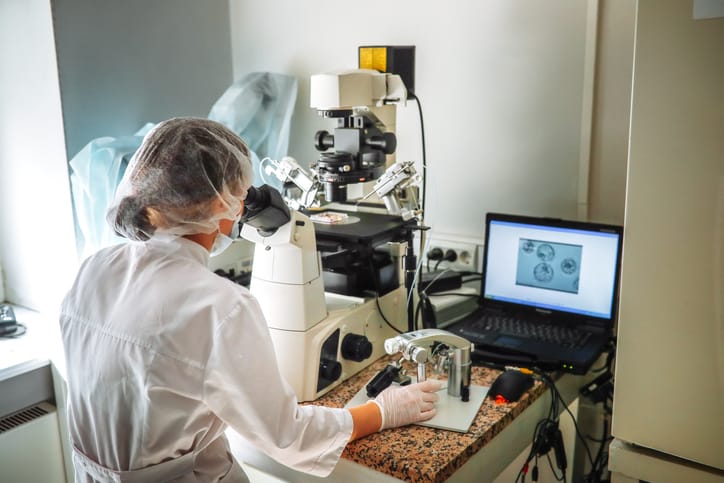
Many of the treatments for breast cancer, including chemotherapy and radiation, may affect fertility, and these changes can be either temporary or permanent. Even if the effects are temporary, some treatments can last throughout many of the childbearing years.
Although many cases of breast cancer occur in individuals older than 50, it can also develop in younger people who may want to keep their family planning options open. If fertility preservation is a concern, you have many options to consider if you hope to grow your family. A diagnosis of breast cancer doesn’t mean you can’t have children of your own.
Embryo and egg freezing
One of the more common options for preserving fertility is storing your eggs before treatment begins. With either of these options, you’ll first take medications to stimulate your ovaries to produce multiple mature eggs at once.
Then, you will undergo a procedure to harvest the eggs, which is usually done under some form of sedation. Unfertilized eggs will be immediately stored via cryopreservation, or the eggs will be fertilized and the resulting embryos will be stored.
Be aware that preimplementation genetic testing, which assesses for certain genetic disorders, cannot be performed on unfertilized eggs. However, it can be performed once those eggs are later thawed and fertilized.
Read more about breast cancer treatment and care
Ovarian suppression
Ovarian suppression, which is usually achieved with a class of drugs called gonadotropin-releasing hormone (GnRH) agonists, works to temporarily stop your ovaries from working. This can make them less sensitive to the harmful effects of chemotherapy.
Ovarian tissue freezing
During ovarian tissue freezing, the ovarian tissue is removed surgically, frozen and reimplanted after breast cancer treatment. This is a newer procedure that still has mixed opinions among experts, but it’s an established method and hasn’t been considered experimental since 2019.
Considerations when weighing your options
One of the major considerations when deciding on which option to pursue is cost. Your insurance may cover certain fertility preservation options, for example, but not others.
You’ll also need to think about the amount of time needed to complete each of these choices. For example, if your care team recommends you start treatment immediately, there might not be enough time to complete the egg retrieval process.
The sooner you’re able to set up an appointment with your oncologist or fertility specialist after diagnosis, the more time you may have to think over your options and decide what’s best for you and your family.
Sign up here to get the latest news, perspectives, and information about breast cancer sent directly to your inbox. Registration is free and only takes a minute.